Feasibility analysis of customizing special dimensions for manual platform vehicles
1、 Basic concepts and market status of manual platform vehicles
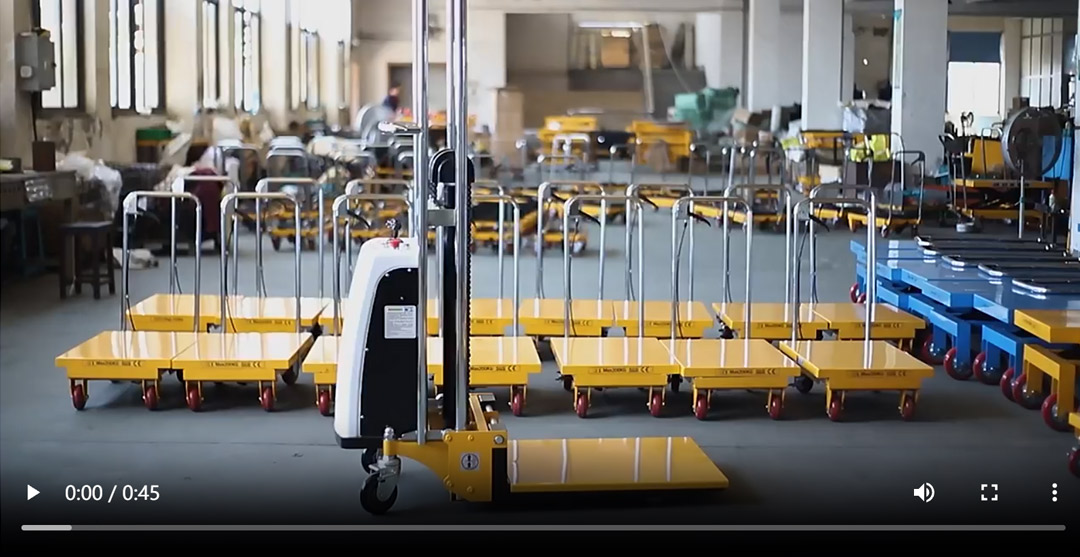
As a common material handling equipment, manual platform trucks are widely used in various industries such as warehousing, logistics, and manufacturing. This type of equipment has become a tool for small and medium-sized handling operations due to its advantages of economic practicality, easy operation, and low maintenance costs. Standard sized manual platform vehicles can usually meet the needs of most conventional usage scenarios, but with the diversification and specialization of industrial applications, the demand for customized special sizes is increasing.
The mainstream size range of manual platform vehicles in the current market is usually between 800-2000mm in length and 500-800mm in width, with a load capacity ranging from 500kg to 3000kg. Although these standard products have a wide coverage, in certain special application scenarios such as narrow channel operations, oversized handling, or specific process requirements, standard size products are often difficult to fully match user needs, which has led to a market demand for customized services.
2、 Feasibility analysis of customized technology for special sizes
From a technical perspective, it is completely feasible to customize special sizes for manual platform vehicles, mainly based on the following factors:
- Modular design concept: The design of modern manual platform vehicles generally adopts a modular structure, and the main components such as the frame, hydraulic system, wheel set, etc. can be adjusted in size and reassembled according to needs. This design concept provides a technical foundation for customizing product dimensions.
- Material processing flexibility: Manual platform vehicles mainly use steel as the main structural material. The cutting, welding, and forming processes of steel are mature, and the size can be flexibly adjusted according to design requirements without significantly increasing manufacturing costs.
- Adaptability of hydraulic system: The hydraulic system of the manual platform vehicle is relatively independent. Within the range of size changes, it can adapt to different sizes of the vehicle body by adjusting the cylinder stroke and pump station parameters, without the need to redesign the core system.
- Compatibility of accessories: Standard accessories such as wheelsets and handles are well supplied in the market, and suitable specifications can be selected for matching according to customized sizes, ensuring the functional integrity of customized products.
3、 Key factors to consider when customizing special sizes
Although technically feasible, multiple factors still need to be comprehensively considered in the actual customization process:
- Structural strength calculation: Dimensional changes must be based on scientific mechanical calculations. Especially when the platform length increases, it is necessary to recalculate the cross-sectional dimensions and material thickness of the frame load-bearing beams to ensure the structural safety factor under full load conditions.
- Stability analysis: Changes in platform size will affect the overall center of gravity position of the equipment, especially changes in the width direction, which will directly affect lateral stability. Stability verification must be conducted during customized design, and anti rollover devices may be added if necessary.
- Ergonomic adaptation: The height and angle of the operating handle need to match the customized platform size to ensure the comfort and safety of the operator’s force application under different load conditions.
- Channel adaptability assessment: For customized platform vehicles used in narrow spaces, in addition to considering the size of the platform itself, it is also necessary to calculate the turning radius and channel width requirements to ensure the maneuverability of the equipment in actual usage environments.
- Transportation and storage limitations: Customized products with oversized dimensions need to consider the convenience of transportation and storage, and folding designs or detachable structures can be used if necessary.
4、 Typical application scenarios for customized special sizes
Special sized manual platform vehicles have irreplaceable application value in multiple professional fields:
- Narrow space operation: In confined spaces such as cabins, aircraft maintenance cabins, substations, etc., it is necessary to customize narrow platform vehicles with a width that can be reduced to 400mm or even smaller, while maintaining sufficient load-bearing capacity.
- Long piece material handling: For the handling of materials of equal length such as pipes and profiles, platform trucks with a length of over 3m can be customized and equipped with specialized material fixing devices.
- Special industry applications: For example, platform trucks used in cold storage need to take into account the size of insulation doors, and can be customized with low height designs; The platform vehicle used in the clean room may need to reduce the wheel diameter to meet ground protection requirements.
- Production line integration: In some automated production lines, platform cars need to be precisely docked with conveyor equipment, which requires precise millimeter level matching of platform dimensions.
- Heavy duty special handling: Customization requirements beyond the standard bearing capacity, such as heavy-duty platform vehicles weighing over 5 tons, require comprehensive reinforcement design from materials to structures.
5、 Implementation process of customized services
Standardized customized services should follow the following process:
- Requirement analysis stage: Detailed understanding of key parameters such as usage environment, material handling characteristics, and operation frequency, clarifying the main objectives and constraints of customization.
- Scheme design stage: Engineers perform structural calculations and scheme design based on requirements, provide multiple optional schemes, and evaluate the cost and performance characteristics of each scheme.
- Technical confirmation stage: Confirm the design scheme with the customer, including material specifications, dimensional tolerances, surface treatment and other detailed requirements, and form a written technical agreement.
- Prototype production stage: Produce the prototype according to the confirmed plan, conduct strict load testing and operation testing, and verify the feasibility of the design scheme.
- Batch production stage: After the prototype verification is passed, batch production is carried out according to the order requirements to ensure that each product meets the customized specifications.
- After sales service stage: Provide specialized installation guidance and maintenance training, and develop specialized maintenance plans based on the characteristics of customized products.
6、 Cost and cycle considerations
Customization of special sizes usually incurs certain cost increases, mainly influenced by factors such as:
- Material cost: An increase in size often means an increase in material usage, especially when high-strength special steel is required, the material cost increases significantly.
- Mold cost: If the customized size exceeds the scope of the standard mold, a new mold may need to be opened or a more time-consuming manual processing method may be used.
- Production efficiency: Customized products cannot be produced in standardized batches, resulting in relatively high unit labor costs.
- Testing and verification: Customizing products requires additional testing procedures and verification processes, which increases research and development costs.
From the perspective of production cycle, customized products with special sizes usually require 30% -100% more delivery time than standard products, depending on the complexity of customization and production scheduling. Simple size adjustments may take 2-3 weeks to complete, while complex heavy-duty customization may require a cycle of more than 2 months.
7、 Quality assurance and compliance with standards
Customized products also need to comply with relevant industry standards and safety requirements:
- Load testing: All customized products must undergo static load testing at 125% rated load and dynamic load testing at 110% rated load to ensure safety margin.
- Stability testing: Design a specialized stability testing plan based on the characteristics of size changes, such as slope testing, partial load testing, etc.
- Material certification: Material certification is required for the main load-bearing components, and non-destructive testing is required for critical welds.
- Operational safety: Verify the operational comfort and emergency braking performance under customized dimensions to ensure compliance with ergonomic requirements.
- Document integrity: Provide customized product specific technical documents, including user manuals, maintenance manuals, and load charts.
8、 Future Development Trends
With the growth of personalized demand in the manufacturing industry, manual platform car customization services will present the following development trends:
The application of parametric design tools will shorten the customization design cycle, and customers can independently choose size parameters and obtain 3D models and quotations in real time through an online configurator.
The application of lightweight materials such as high-strength aluminum alloys and carbon fiber composite materials will break through the limitations of traditional steel in size customization.
- Intelligent functional integration, such as overload alarm and electronic weighing modules, will become standard configurations for high-end customized products.
- Establish a rapid response manufacturing system that meets diverse customization needs through standardized module combinations, balancing cost and delivery speed.
- Deepening the concept of full lifecycle service, customized products will be equipped with more comprehensive remote monitoring and maintenance guidance systems.
9、 Conclusion
In summary, the special size customization of manual platform vehicles is technically feasible and can effectively solve material handling problems in specific application scenarios. Successful customized services need to be built on sufficient communication of requirements, scientific engineering design, and strict quality control. Although customized products may increase in cost and lead time, for users with special needs, this investment often brings higher work efficiency and better security. With the advancement of design and manufacturing technology, the response speed and cost control ability of customized services will continue to improve, providing accurate material handling solutions for more industries.